The E386 Mapping Drone

The E386 is one of the leading drones in the world for Agriculture, Surveying, Construction, Mining and Conservation applications.

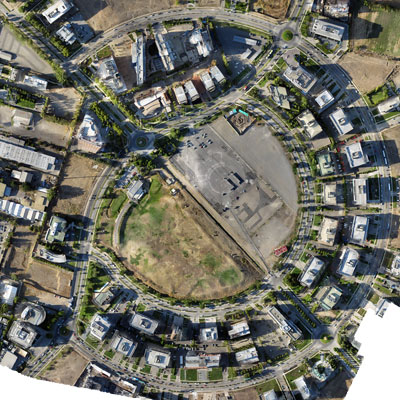
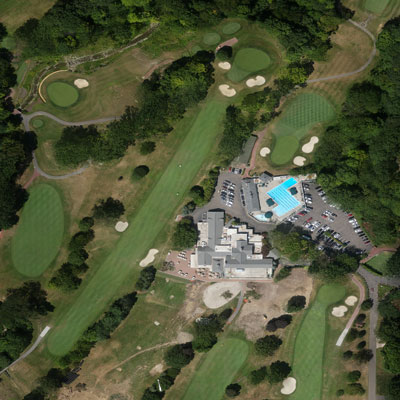
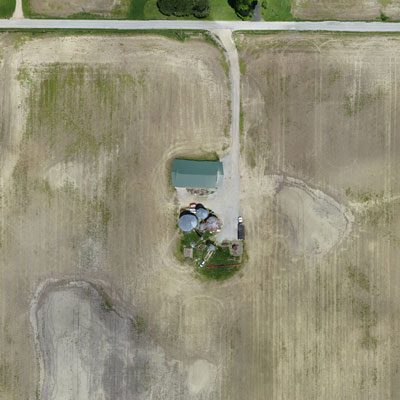
The E386 has been proven through thousands of hours of flight from hot and humid jungles to freezing mountains above 13,000 feet. It can fly 850 acres in 85 minutes at 3.7cm GSD completely autonomously. The E386 operates according to a pre-planned mission from takeoff the touchdown, or you can use the hand remote control to take over control at any time. The E386 can be flown completely from the ground control station, and does not require any manual control to use.

This package is customizable depending on your application. If you’re not sure what you need, contact us and we’ll walk you through the options and special considerations for your project. Each E386 is flight tested, and a dedicated support engineer is available to help you get set up and flying.
Made for Mapping

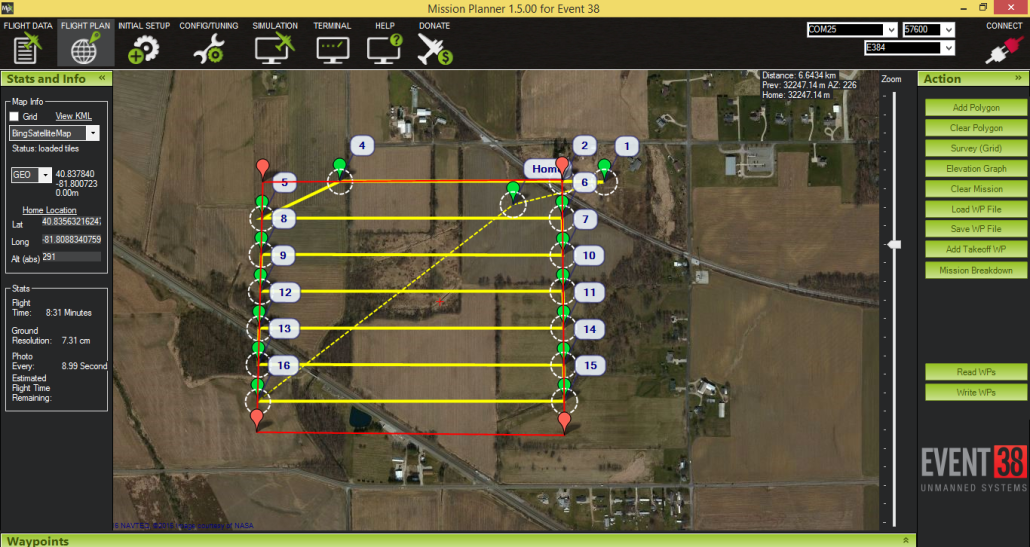
The E386 is an autonomous platform made to carry a variety of sensors such as high resolution visible light, multispectral, thermal, and surveillance cameras. Our customized Mission Planner package automatically plans flight lines and overlap based on the sensor and desired ground resolution. For repeat jobs, you can save a mission and retrieve it with a few clicks. Aircraft recovery by parachute can be planned in just a few clicks as well.

The Intellishoot smart image capture system ties the camera in to the autopilot and GPS for precise control. It takes pictures at the planned overlap rate, and saves the GPS coordinate for each image automatically. When the mission is over, it closes the camera hatch just before touch-down to protect the camera lens from dirt and debris.

Intellishoot streamlines data collection and post-processing

camera mount hatch automatically closes to protect lens for landing

Mission Planning and Control Software

Mission Planner is an easy to use planning and flight control system. It connects wirelessly to your E386 and allows you to see flight telemetry and change mission parameters in real time.

Key Mission Planner features include:

  • Quickly plan, save and upload autonomous mission plans into your E386 with a simple point-and-click interface
  • Automatic approach pattern and recovery planning
  • An automated preflight checklist
  • Real time flight data from your E386: altitude, speed, direction, battery level, and see its location on a moving map
  • Automatically recording logs of every flight for record keeping and compliance

Specifications

  • Dimensions: 190cm Wingspan, 130cm Length (75 x 51 inches)
    • Wings and body disassemble for easy transport
  • Weight: 2.5kg (5.6 lbs)
  • Endurance: 85 minutes flight time
  • Cruise Speed: 12m/s (27 mph)
  • Range: 60km (37 miles)
    • Map up to 850 geo-referenced acres per flight at 120m AGL
  • Max Payload: 500g (1.1 lbs)
  • Automatic lens protection for landing
  • Automatic parachute landing
  • Complete mission planning and operations software
    • For your Windows 7, 8 or 10 laptop (not included)
    • Autonomous flight, Return-to-launch, Automated pre-flight checklists, much more
  • Operating Conditions
    • MSL Ceiling: 3,960 meters, (13,000 ft), – auto take-off tested to 3,100 meters, (10,000 ft)
    • Max sustained wind speed: 10 m/sec, (22 mph) for autonomous operation
  • Telemetry Range: 5 km+ (3.1 mi)

Complete Autonomy Launch-to-Landing

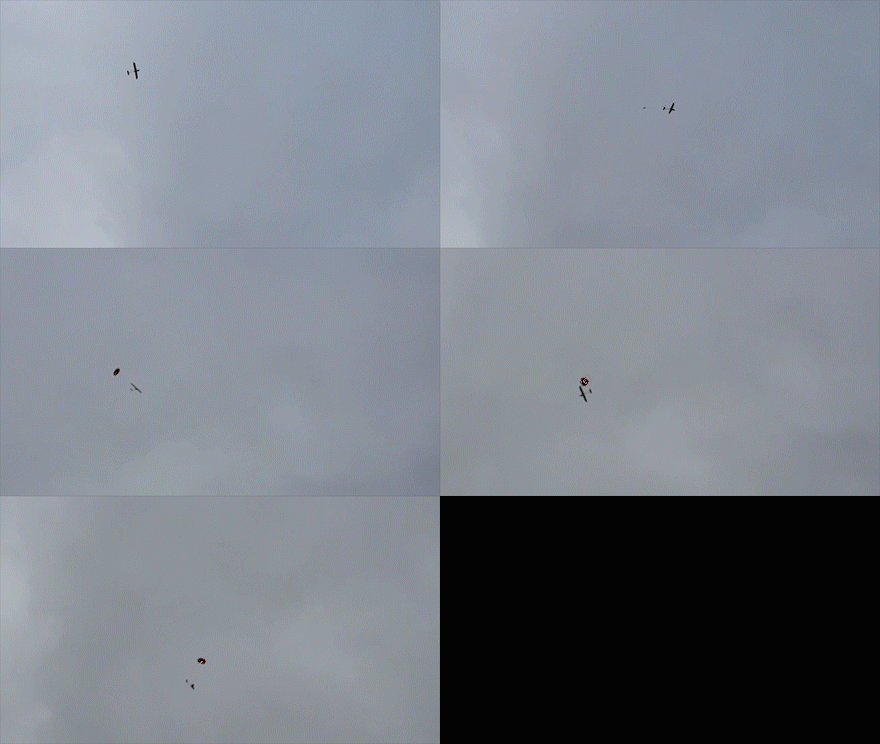
The E386 offers launch and recovery capability unprecedented in its class, capable of fully autonomous takeoff, flight, and landing. Long endurance aircraft often require a larger space for recovery. The E386 uses a parachute to descend almost vertically down from deployment altitude into the landing zone at low speed.

Parachute Recovery

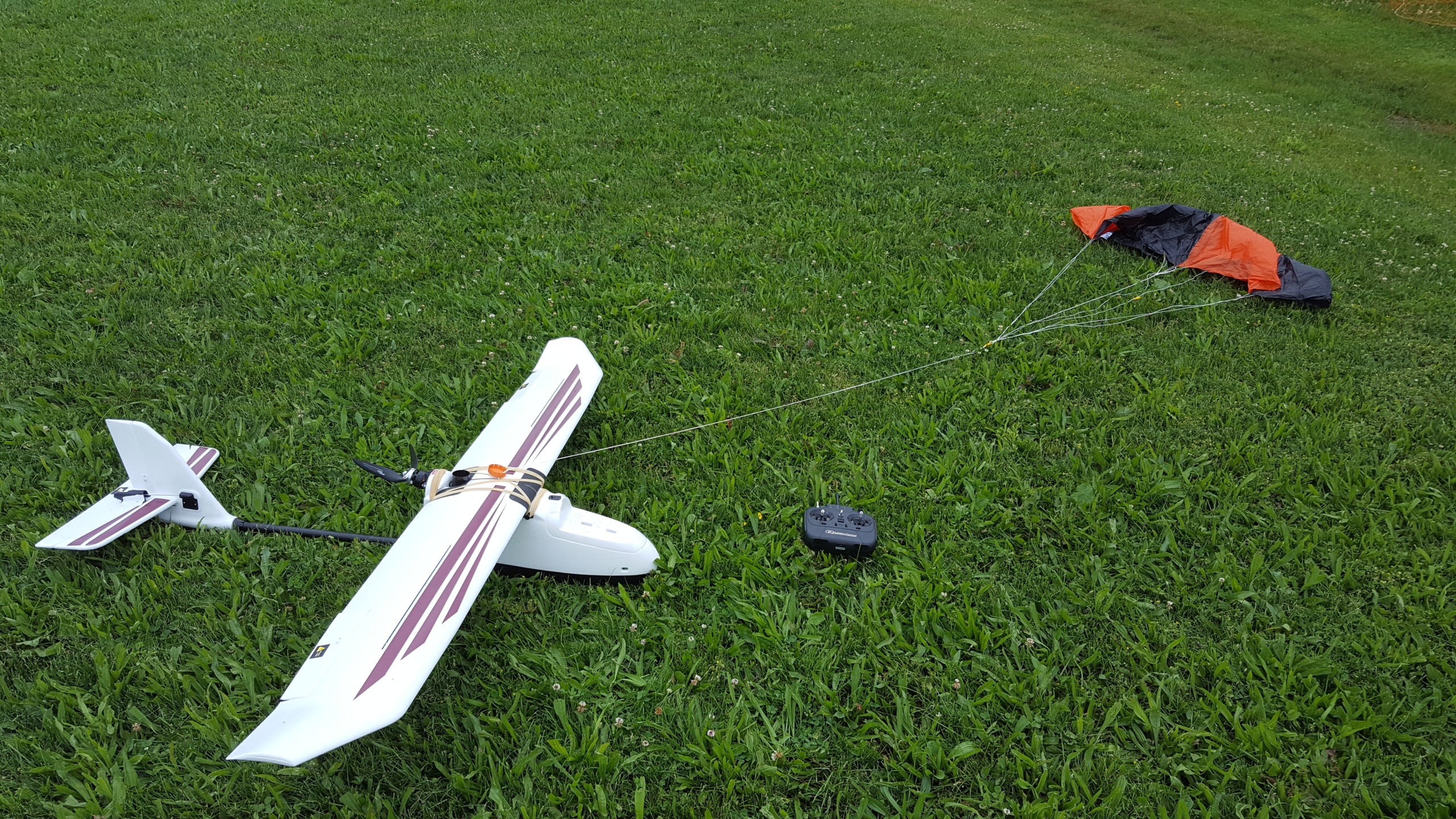
The E386 is designed to be recovered by parachute. The parachute allows the E386 to descend almost straight down at a safe speed of 15 feet per second. When taking wind into account, the E386 can be recovered in an area as small as a 30 meter diameter circle. The parachute is deployed through a command that can be pre-programmed into a mission for completely hands-off flying. The Iris parachute and Harrier launch system from FruityChutes offer lowest weight and easiest to pack system we’ve tested for light UAS. The kit includes a packing tool and packing instructions for a reliable deployment every time.

See Event 38 Drones In Action

Learn how others are using their aircraft from Event 38.

Agriculture

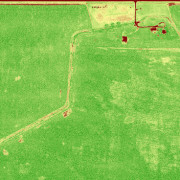
Using an NGB Converted Camera and the Drone Data Management System™ to document, inspect and manage broad acre crop growth.

Read More

Surveying

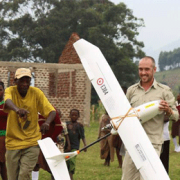
Luke Wijnberg uses his E384 to survey a remote Ugandan river valley in difficult terrain to support the construction of a hydroelectric power plant.

Read More

Quarry, Mining & Aggregates

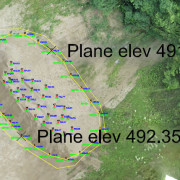
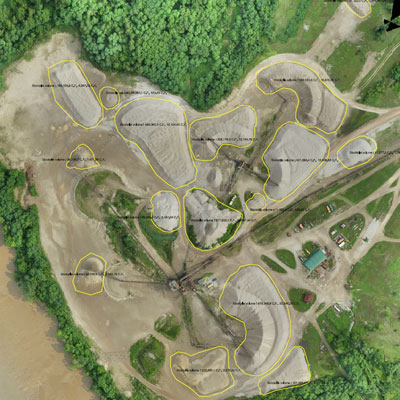
An analysis of the accuracy and operating cost of using the E384 to measure aggregate stockpile volumes.

Read More

Conservation

Drone & GIS uses multiple E384s to document the health of forest habitats for the endangered Brown-headed Spider Monkey.

Read More

Camera Options

There are two standard RGB camera options for the E384: The the Sony R10C and RX1R II. All cameras include an automatic hatch mount and utilize Intellishoot, which automatically takes pictures at optimal overlap to maintain consistency and eliminate redundant data collection. The major differences in these cameras are as follows.

  • Sony R10C – 20.1MP Resolution, Landscape Orientation for Maximum Efficiency, PPK Compatible, Full Power Provided by Aircraft
  • Sony R10C Plus Companion Computer – Automatically geotags images in real time and uses camera feedback to improve geotag accuracy. Images are stored with geotags in EXIF data and can be imported directly into any photogrammetry software, bypassing the normal geotagging process.
  • Sony RX1R II – 42MP Full Frame Exmor R BSI CMOS Sensor, PPK Compatible, Supplementary Power from Aircraft. Currently only compatible with E384-Heavy configuration.

Other camera options are available for specialty applications, please contact us for more information.

  • Customized Canon Powershot S110 with infrared filters specifically designed to measure NDVI. Using ratios of visible light to infrared light, we can calculate NDVI, which allows for the detection of crop health.
  • MicaSense RedEdge
  • Parrot Sequoia
  • FLIR Vue Pro

PPK GPS Options

Event 38 offers two PPK GPS options integrated with the E386. The Emlid Reach PPK GPS is an L1-only receiver that enables data collection at centimeter level precision without ground control points. See our case study to read more about the system’s real world accuracy tests. A dual frequency L1/L2 PPK GPS receiver made by Event 38 and powered by Piksi Multi is also available. The accuracy of both systems is comparable. The main advantage of upgrading to L1/L2 is to improve time to first lock and Q1 solution reliability levels.

Both systems include:

  • Integration of precision timing on the R10C or RX1R II camera
  • GPS receiver with integration with an E384/6
  • Antenna and ground plane installation on the E384/6
  • Image utility to augment RTKLIB post-processing

PPK GPS systems require a receiver both on the aircraft as well as one in a fixed location on the ground to provide corrections. Both systems are compatible with all known survey-grade GPS receivers, as long as they are able to save raw observation files in Rinex format. In certain areas, you may be able to use publicly available base stations such as the CORS Network in the United States. We recommend the Reach RS+ base station for L1-only systems. We do not currently offer any L1L2 base station receivers.

The E386 is constructed from high performance expanded poly-olefin foam (EPO, not styrofoam) in a process similar to injection molding plastics. The EPO foam structure combined with reinforcing carbon rods allows the E386 to maintain its light weight, leaving more room for battery and sensor payload and still launching without the need for additional launch assistance equipment. An ABS plastic skid plate reinforces the underside of the fuselage and can withstand impact with rocks, pavement and other hard surfaces.

  • EPO foam can flex/bend without breaking. EPO foam allows structural flexibility to dissipate energy in tight turns and hard landings. Closed cell foam absorbs damage from obstacles rather than cracking or breaking on impact.
  • Dents and dings can be repaired by dipping the affected area in boiling water, forcing the beads to expand back to their original shape
  • Complete, Flight Tested Aircraft
  • Pixhawk 2.1 Flight Controller
  • Flight Planning and Control Software for Autonomous Flight (Includes GPS and Flight Data Log)
  • Handheld Remote Controller
  • Long Range Ground Station Monitoring and Command Radio
  • 1 Flight Battery and Rapid Charger – 4 Cell, 8.0 Ah LiPo

A Limited Factory Warranty is included in your purchase price. Click here for complete warranty and returns information.